Power Delivered Without Interruption or Overload
Panels, Distribution, and Equipment Power in Lake County for load capacity verification and overcurrent protection
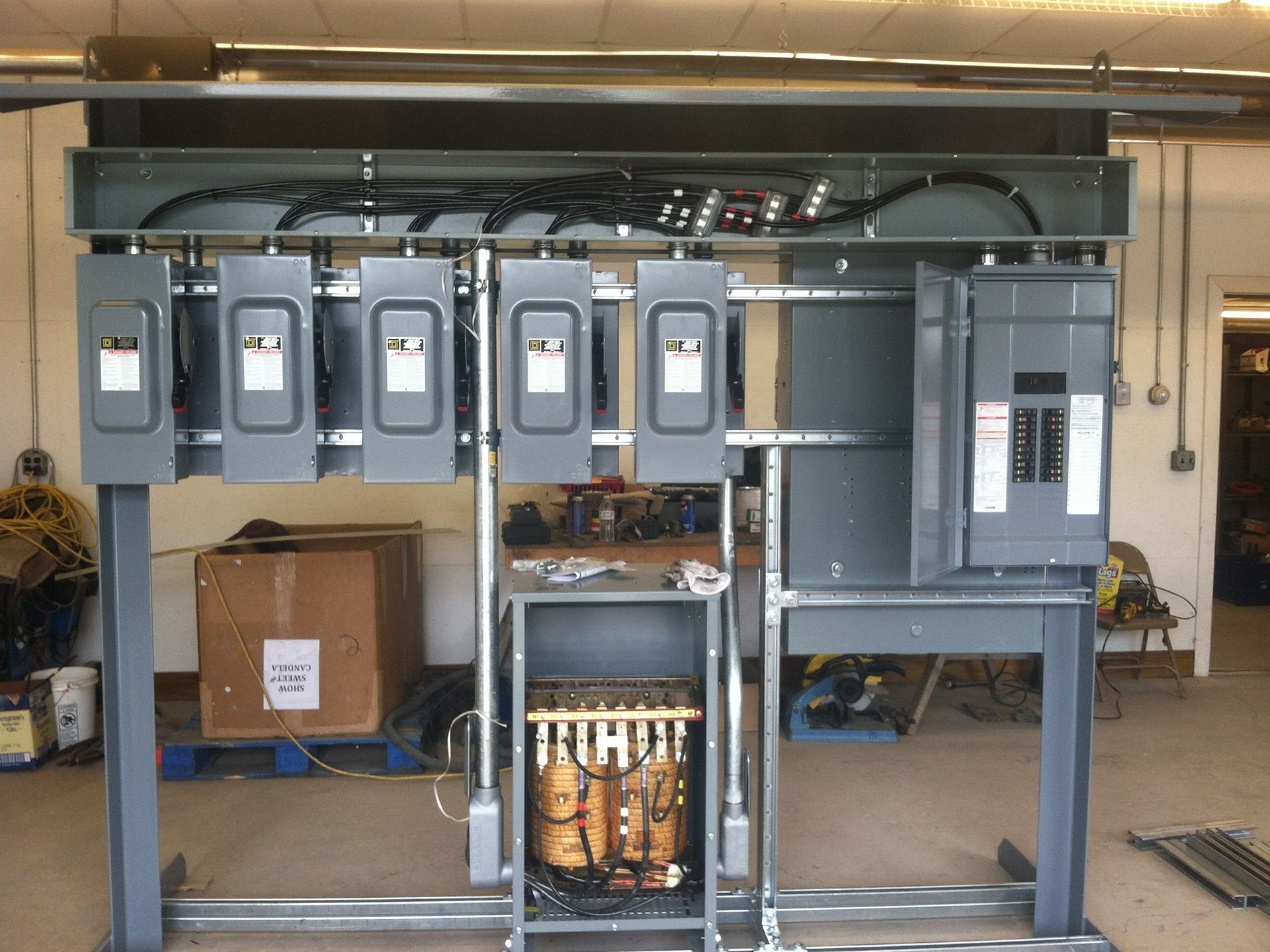
Electrical distribution systems fail when panels cannot safely handle actual connected loads, breakers age beyond reliable trip thresholds, or transformers operate continuously above rated capacity without thermal protection. R.E. Yates Electric Inc. inspects, upgrades, and maintains distribution panels, breakers, and connected equipment for commercial, industrial, and multi-unit properties throughout Orlando and Central Florida. You need this service when adding equipment that increases electrical demand, when existing breakers trip frequently under normal operations, or when insurance audits flag panel conditions as non-compliant with current safety standards.
Inspection involves load calculation to verify that your panel's rated capacity matches actual demand, thermal scanning to detect overheating connections, and breaker testing to confirm proper trip characteristics. Technicians replace aging breakers that no longer interrupt fault current reliably and install properly sized overcurrent protection for each circuit based on conductor ampacity and connected load. Documentation includes single-line diagrams, load schedules, and compliance verification formatted for code officials and insurance underwriters who require proof that distribution equipment meets NFPA 70 standards.
Schedule a distribution system evaluation to verify that your panels handle current loads without exceeding thermal limits.
The work begins with voltage measurement at each panel to confirm balanced phase loading, followed by torque verification on bus bar connections and breaker terminals where loose hardware causes arcing and heat buildup. Infrared cameras detect hot spots invisible during visual inspection, and load monitoring over a billing cycle reveals whether peak demand exceeds panel rating during production shifts or HVAC startup. Any breaker showing calibration drift is replaced with a unit that matches the circuit's wire gauge and protective requirements.
After the service is complete, your facility experiences fewer unexpected outages because breakers trip only under true overload or fault conditions instead of nuisance tripping from internal wear. Equipment receives stable voltage without the sags that damage motor windings and electronic power supplies. Panels operate within their thermal rating, reducing fire risk and extending the lifespan of bus bars and breaker assemblies that degrade rapidly when chronically overloaded.
The scope includes transformer testing and load verification but does not cover utility-side equipment or primary service conductors upstream of your facility's main disconnect. If your building requires capacity expansion beyond the existing service rating, a separate utility coordination project will be recommended with engineering documentation and easement modifications as needed for larger infrastructure.
What Property Owners Usually Ask
Facility managers often want to understand how panel degradation progresses and what triggers the need for replacement versus repair.
What causes electrical panels to fail over time?
Bus bar corrosion from humidity exposure, breaker contact wear from repeated cycling, and thermal damage from sustained overload all reduce panel reliability, with failure rates accelerating in panels over twenty years old.
How do you determine if a panel can handle additional equipment load?
Load calculation compares the panel's rated ampacity against measured demand from all connected circuits, including startup surge for motors and compressors, to verify that total load remains below the panel's continuous rating.
What is overcurrent protection and why does it matter?
Overcurrent protection devices interrupt current flow when it exceeds safe levels for the connected conductors, preventing wire insulation from melting and igniting surrounding materials during short circuits or ground faults.
Why do multi-unit properties in Central Florida require frequent panel inspections?
Tenant turnover introduces unapproved circuit modifications, humidity accelerates corrosion in outdoor panel enclosures, and aging aluminum feeders develop high-resistance connections that cause voltage drop and overheating.
What documentation will I receive after panel maintenance?
You receive thermal scan images with temperature annotations, load calculation worksheets, breaker test results, and a compliance summary that confirms your distribution system meets current code requirements.
R.E. Yates Electric Inc. performs panel inspections and upgrades across Tavares, Lake County, and surrounding commercial properties. Request a load analysis and thermal scan to identify distribution system weaknesses before they cause equipment damage or operational downtime.