Power Infrastructure Built for Industrial Demand
Medium Voltage and Underground Distribution in Lake County for facilities requiring high-capacity electricity across multiple buildings
R.E. Yates Electric Inc. designs and installs medium voltage distribution systems and underground power lines for industrial and large commercial properties throughout Central Florida. Your facility needs these systems when electrical demand exceeds the capacity of standard service—typically above 600 volts—and when power must reach multiple structures, heavy equipment, or production areas without overhead lines. Proper transformer sizing, conduit routing, and grounding determine whether your operation runs safely at full capacity or faces voltage drop and equipment failure.
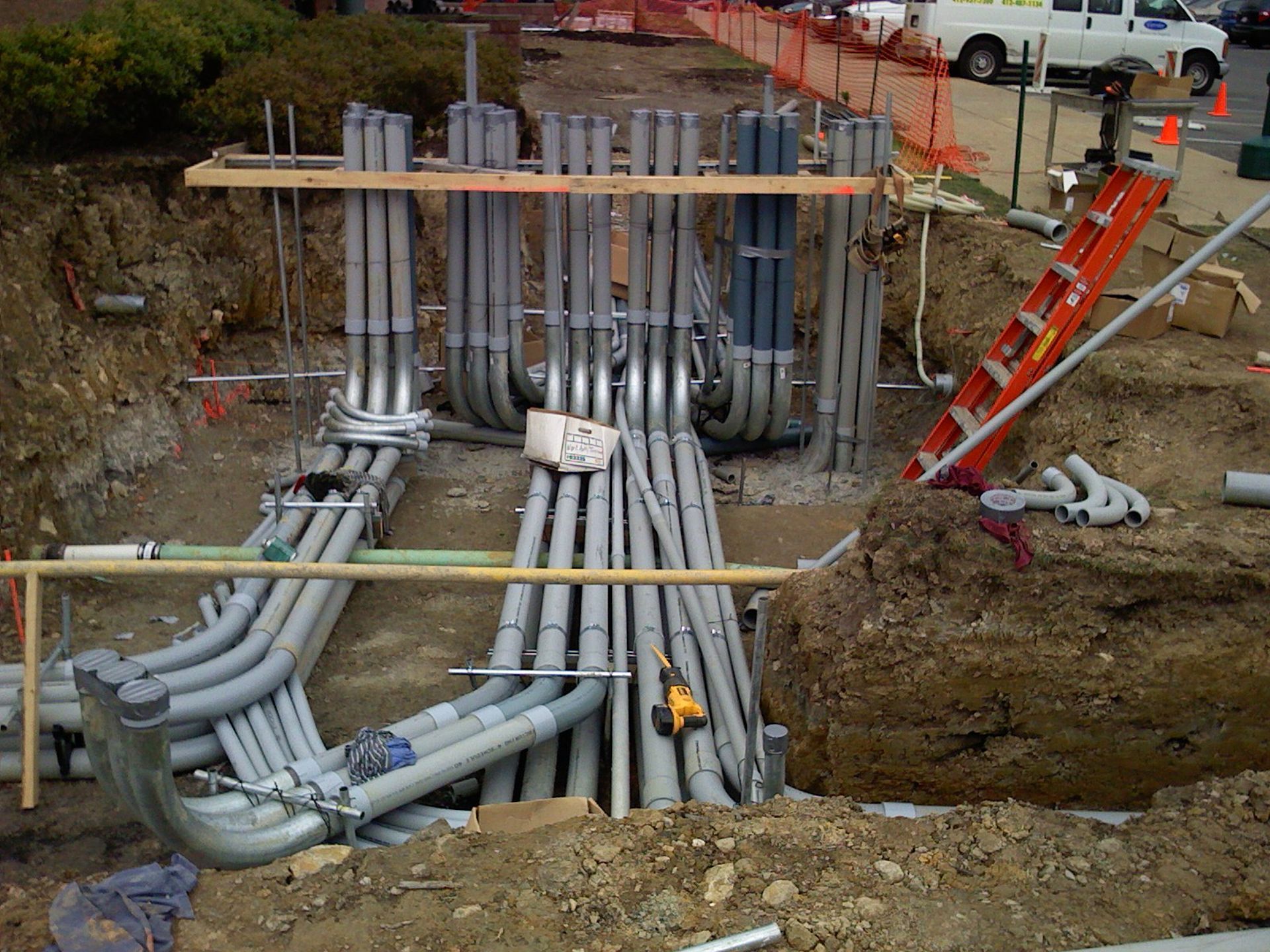
Medium voltage distribution moves electricity from the utility connection point through transformers and underground conduit to substations and panels across your property. The system includes cable rated for the voltage level, concrete-encased or direct-buried duct banks, grounding grids to dissipate fault current, and coordination with utility standards and municipal inspection protocols. Load calculations drive transformer selection, and conduit paths must account for existing utilities, soil conditions, and future access for maintenance.
Schedule a site evaluation to review your electrical load requirements and develop a distribution plan that meets utility and code standards.
Underground distribution requires coordination between your contractor, the serving utility, and the local authority having jurisdiction before any conduit goes in the ground. R.E. Yates Electric Inc. manages that process—submitting plans, scheduling utility interconnection, arranging inspections—so installation proceeds without delays or rework. Transformer sizing must match not only your current load but also planned expansions, and grounding systems must handle fault conditions without creating safety hazards for personnel or damaging sensitive controls.
Once the system is energized and inspected, you'll notice stable voltage at every panel, no voltage sag during equipment startup, and the ability to add circuits or loads without overloading the service. Transformers operate within their thermal limits, underground cable remains protected from physical damage and moisture intrusion, and your facility meets the electrical capacity required for growth or process changes. Proper documentation and as-built drawings become part of your facility records for future maintenance or modifications.
The system includes safety disconnects, overcurrent protection rated to the cable ampacity, and grounding that ties to your building's main ground grid. If your operation includes outdoor equipment, submetering, or multiple tenants, the distribution design accounts for those divisions and ensures each section can be isolated for maintenance without shutting down the entire facility.
What Facility Managers Usually Ask
Industrial and commercial operators throughout Central Florida have similar concerns when evaluating medium voltage systems and underground power distribution.
What size transformer does my facility need for current and future load?
Transformer sizing depends on your total connected load, the diversity factor for equipment that doesn't run simultaneously, and any planned additions—motor loads, HVAC upgrades, or production equipment—that will increase demand over the next several years.
How deep do underground conduits need to be installed?
Conduit depth varies by voltage level, location, and whether the run passes under pavement, landscaping, or building slabs—minimum burial depth in Tavares and across Central Florida typically ranges from eighteen inches for conduit under concrete to thirty-six inches in open areas subject to vehicle traffic.
What happens if the utility service needs to be expanded later?
Utility interconnection agreements and transformer pad locations are selected to accommodate future capacity increases, so adding a second transformer or upsizing cable can happen without relocating primary infrastructure or rerouting the underground duct bank.
How long does installation take for a typical industrial site?
Installation duration depends on the length of underground runs, the number of transformers and switchgear locations, and utility coordination schedules—most projects span several weeks from excavation through final utility interconnection and commissioning.
What documentation do I receive after the system is energized?
You receive as-built drawings showing actual conduit paths and depths, transformer nameplate data and settings, grounding grid test results, and copies of all utility interconnection agreements and inspection approvals for your facility records.
R.E. Yates Electric Inc. handles medium voltage and underground distribution across Lake County, coordinating every phase from load analysis through final startup. Contact us to discuss your facility's power requirements and develop a distribution system that supports your operation safely and reliably.